At Food Democracy we believe that food is key to helping us understand the systems and dynamics that shape our lives. Whether it’s a culture, historical event, inequality, or personal attitude – food can offer us a way to make sense of it. Through these articles, we will take a look at different food-related topics, and in doing so we will explore new ways of thinking about how we live with food, each other, and the planet.
All across the world, humans have used fermentation to preserve food, increasing uptake of beneficial probiotic bacteria and celebrating the incredible salty, briny, tangy and punchy flavours that the process brings to life. Kimchi is a ferment that has been made for thousands of years. It is deeply embedded within Korean culture; and the process of making it can teach us about the importance of collaboration and community.
A Brief History
Kimchi (literally ‘soaked vegetables’) is a Korean fermented vegetable dish with roots stretching back 3,000 years to the Three Kingdoms period, when it existed as a simple salted white cabbage preparation. The punchy chilli version most people recognise today only emerged after Portuguese traders introduced chili peppers to Korea in the early 17th century, and early recipes contain no seafood components like fish sauce or shrimp, meaning the dish was historically often plant-based.
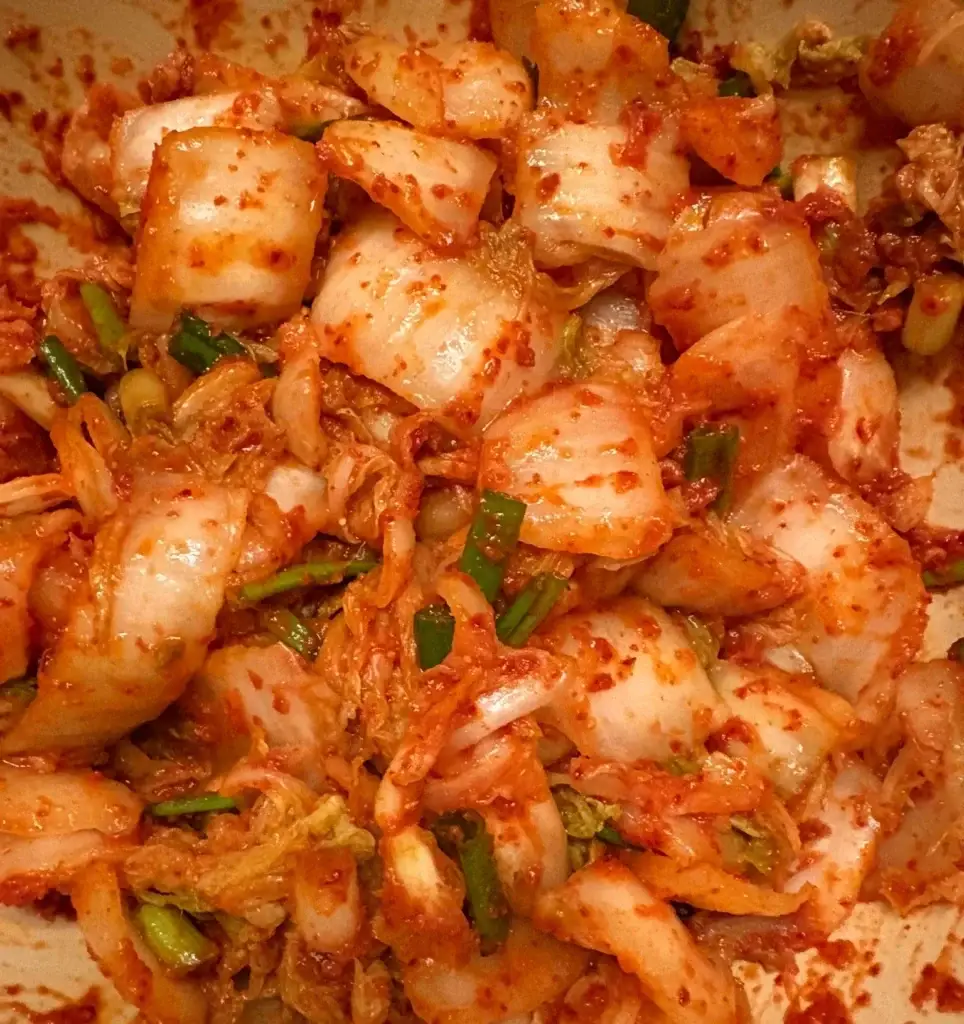
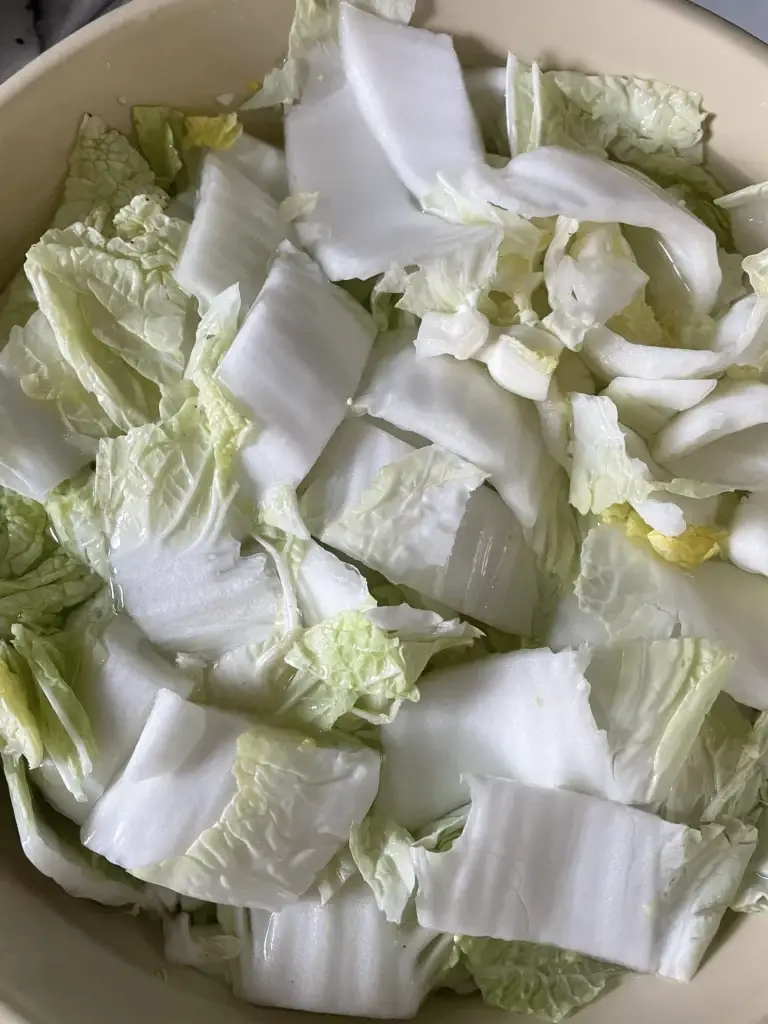
The most popular modern form (baechu-kimchi, 배추김치), is made from Napa cabbage: soaked in a salt brine, mixed with seasonings such as Korean chilli (gochugaru, 고춧가루), garlic, ginger, spring onions, sugar, fish sauce, radish, carrots, salted shrimp, rice flour, apples and pears, and left to lacto-ferment. Regional and seasonal variations include cubed radish kimchi (Kkakdugi, 깍두기); stuffed cucumber kimchi (Oi Sobagi, 오이소박이); and radish water ‘winter’ kimchi (Dongchimi, 동치미), and even oyster or octopus versions in some coastal areas. Kimchi’s long, shape-shifting history is a vivid reminder that the adaptation of food is a dynamic process, continuously impacted by trade, culture, climate and circumstance.
In Korea there is a tradition called ‘Kimjang’, where people come together to make big batches of Kimchi to last for the winter. In 2013, Kimjang was designated an ‘Intangible Cultural Heritage of Humanity’ by UNESCO.
Taking the time
Making kimchi is a lesson in process and patience. Although spare time is not something many of us have in abundance, we can all take inspiration from the process to help us to be more intentional in how we make food, how we perceive it and how we eat it.
Modern convenience means that the effort it takes to make kimchi has reduced. But traditionally, Kimjang has an all year round schedule:
- In spring, households obtain shrimp or anchovy for salting and fermenting.
- In summer, they bulk buy sea salt.
- Towards the end of summer, households dry and grind red chili to make gochugaru.
- In late autumn/early winter, kimjang events are organised and kimchi is made en-masse – brined, washed and seasoned over the course of several days.
- Kimchi is stored in the ground in specialist clay jars (Onggi) throughout the winter.
- And repeat…
Even if you buy all of the ingredients, the brining and fermentation stages mean that you can’t reap the reward immediately with kimchi. But this can help us to think more intentionally about the process behind what we eat.
A community effort
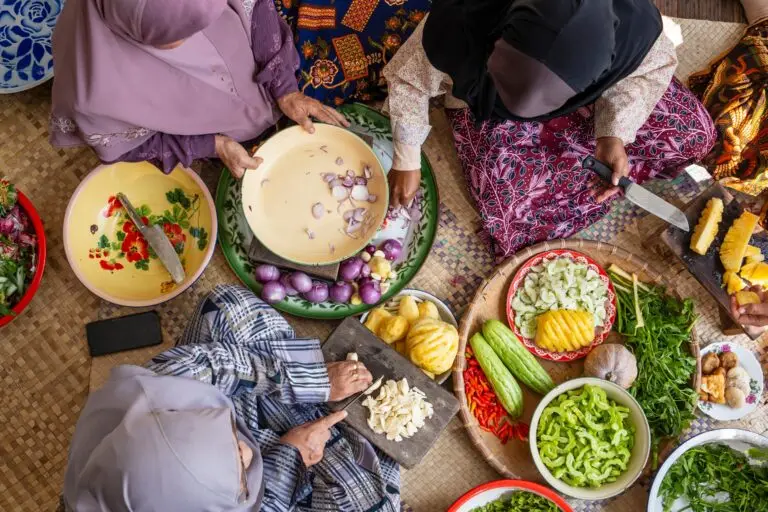
The making process of Kimchi is a deeply communal ritual, bringing together whole families and even communities. The standard seasonal preparation for an average Korean extended family may include 50-200 heads of cabbage. The scale of the operation means that houses often do not suffice for space – production is moved to gardens and social spaces. Family and community members have different roles in the process, but all participants are involved to some degree; seasoning and flavours are tweaked collaboratively to meet the preferences of the collective.
This might feel quite different to how you prepare and consume food. Life is busy, which means that convenience often wins out. This is no different in South Korea where many work long hours. But the designation of Kimjang as a traditional event means that it is still honoured in a busy world. Large public Kimjangs are held in main cities, producing hundreds of boxes of kimchi for distribution to vulnerable and elderly people.
Kimjang means that the preparation of kimchi is a social, collaborative, community-led event. Food Democracy uses food as a starting point to help communities “build the confidence, skills, and power to understand and shape the systems that affect their lives”. A slow, intentional and communal preparation process brings people together and creates time to talk. It shows us the value of community and collaboration. Food is the vehicle for something bigger.
It doesn’t have to be kimchi. Reserve the time to make something, with someone, and enjoy the process. We can draw inspiration from the tradition of Kimjang in our own lives, adapting however we like! Even if this just means making and sharing an easy meal.
Reaping the rewards
Culture
The kimchi-making process is traditionally followed by a feast and Korean rice wine (makgeolli, 막걸리). It is a way to maintain large, social gatherings that are hard to keep alive in the modern day. It can also keep tradition alive for Koreans who are no longer living in their home country. The Kimjang Project holds an annual kimjang in New Malden, an area with a high Korean population, to celebrate kimchi traditions practised by Koreans in the UK.
Health
Kimchi is now a very popular food all around the world and as cultural imports come, it is a good one. The Korean phrase yak sik dong won (약식동원) means that food and medicine come from the same source (i.e. food is medicine), and kimchi encapsulates this. Emerging health research is finding more and more about the role that kimchi and other fermented foods can play in maintaining a healthy digestive system.
Taste
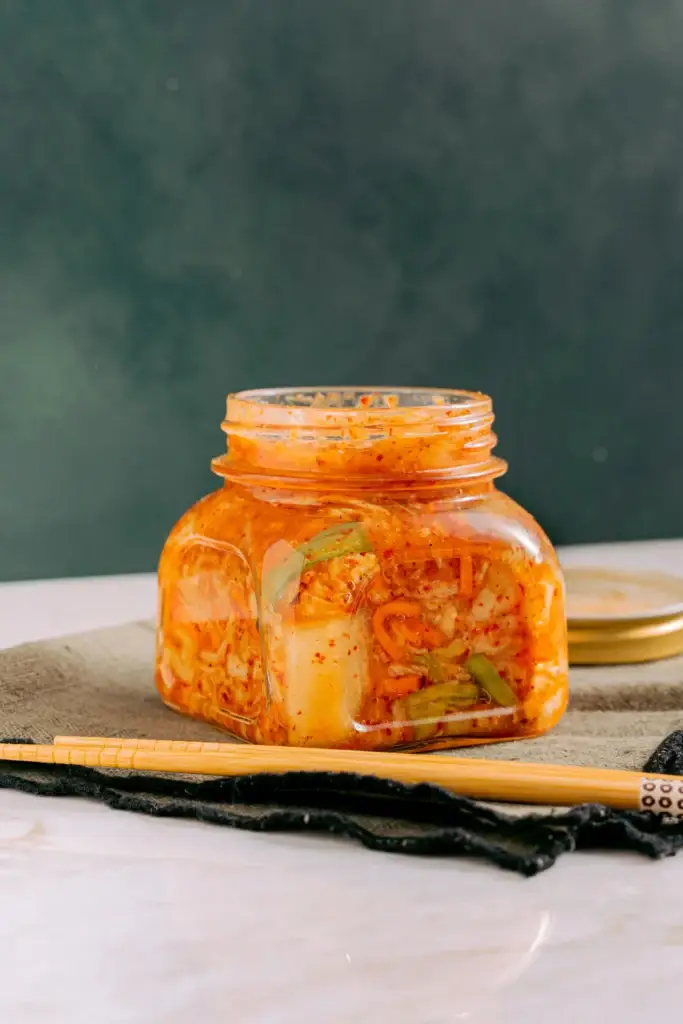
Kimchi is complex in flavour and texture. I make kimchi on a regular basis, usually with friends (admittedly, nowhere near the scale of a Kimjang). I made a batch before beginning to write. This batch has been fermented for 3 days before refrigeration, giving it a deep flavour. I included an apple in the seasoning paste which adds a sweetness and always means a very energetic fermentation; for a few days my morning ritual will include managing a lively jar of kimchi and making a healthy amount of mess.
The end product is spicy, salty, sour, crunchy and fresh – a perfect bite of food alone that also complements a variety of dishes with ease. It is a reward of patience, a flavour that is not replicable without honouring the process.
Towards the end of the batch, the remaining kimchi and kimchi juice will be used for soups (Kimchi-jjigae,김치찌개) and kimchi pancakes (kimchi-jeon, 김치전). Although it loses some of the beneficial properties when cooked, it takes on a whole new flavour profile, mellowing the sourness and bringing out a deep umami.
Food for Thought
Food is more than sustenance. It is a vehicle for conversation, it is (quite literally) food for thought, it tells us stories about history, and it brings us together. Kimchi rewards us at every stage of the process: from the values it teaches us, the conversations it facilitates, and the satisfaction from the final product.